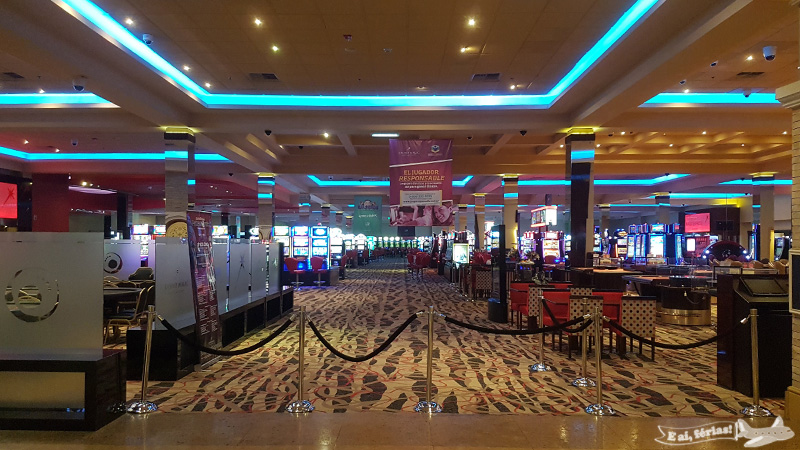

When we first examined online casinos in Canada, we rapidly discovered that the software platform behind a casino dictates almost everything about the experience. The games you play, how smoothly they run, whether the interface feels user-friendly on a phone, even how fast withdrawals hit your bank account, all stem from the platform’s architecture. At Wagibet Casino, we built our whole offering around a thoughtfully picked set of software partners and platform decisions because we know how much this matters. This article guides you through what casino software platforms actually are, how they shape your experience, the game categories you can expect, what the payment and security infrastructure looks like under the hood, and how to get started without falling into common pitfalls. Consider it as a practical guide to the engine behind the casino floor, so you can make knowledgeable choices from the moment you sign up.
How a Casino Software Platform Truly Accomplishes
In every spin of a slot reel and every hand of blackjack, a casino software platform is doing dozens of things at once https://wagibett.ca/. At its core, the platform serves as the central nervous system, integrating player accounts, game libraries, payment gateways, bonus engines, and compliance tools into one cohesive interface. When you log in and see your balance update in real time after a win, that’s the platform’s account management module at work. When you claim a welcome offer and bonus funds appear with specific wagering conditions attached, the platform’s promotional engine has already checked your eligibility, applied the correct multiplier, and set the tracking parameters that determine when you can withdraw. The platform also handles random number generation certification, ensuring every game outcome is genuinely unpredictable and independently verified. Without a solid platform, a casino is just a bunch of disconnected games with no way to manage players, protect funds, or prove fairness to regulators. We chose our platform infrastructure specifically to handle high traffic while keeping response times under a second, because nothing frustrates a player more than lag during a bonus round or a deposit that takes minutes to show up.
The platform also determines how games integrate with the casino’s backend. Some operators use a single proprietary platform where everything is built in-house, but the more common, and often more versatile, approach is an aggregation model. In this setup, the casino’s core platform connects to multiple game studios through API integrations, gathering thousands of titles into one lobby with unified search, filtering, and account tracking. You can jump from a NetEnt slot to an Evolution live dealer table without logging in again or moving funds between separate wallets. The platform normalizes all the different game providers’ data formats so your balance, bet history, and bonus progress stay consistent no matter which studio made the game you’re playing. For you as a player, this means a smooth experience where the technology fades into the background. For us as an operator, it means we can curate a diverse library without forcing you to navigate multiple disconnected systems.
Promotions and the Platform’s Promotional Engine
The welcome offers, top-up bonuses, free spins, and VIP rewards you come across aren’t manually added to your account by a human clicking buttons. They’re managed by the platform’s promotional engine, a rules processor that assesses your account activity against campaign parameters and automatically triggers rewards when conditions are met. When you sign up and make your first deposit, the platform checks your eligibility against criteria like geographic location, deposit method used, and whether you’ve previously held an account. It then assigns the correct bonus percentage, limits the maximum bonus amount according to the promotion terms, and credits the bonus funds to a separate bonus balance with the specified wagering multiplier attached. Every subsequent bet you place adds to the wagering requirement at a rate determined by the game category you’re playing, with slots typically contributing 100% and table games often contributing less due to their lower house edge.
Understanding how the platform tracks wagering progress helps you clear bonuses efficiently. The promotional engine tracks every bet you place and subtracts from the wagering requirement based on contribution rates. A $1 spin on a slot reduces your remaining wagering by $1, while a $1 blackjack hand might reduce it by $0.10 or $0.20 depending on the specific terms. The platform imposes maximum bet limits during bonus play to prevent players from clearing large requirements through a few high-risk wagers. It also handles game restrictions, blocking bonus funds from being used on titles that the promotion excludes. When the wagering requirement reaches zero, the platform automatically moves the remaining bonus funds and any associated winnings to your real-money balance, making them withdrawable. This whole process runs without manual intervention, which is why you can claim a bonus at any hour and see it activate instantly. We present your wagering progress in the account dashboard so you always know exactly how close you are to converting bonus funds into withdrawable cash.
How Game Assortments Are Developed and Categorized
The gaming interface you view at Wagibet Casino isn’t a chaotic assortment of options. It’s an organized collection designed around player tastes, game dynamics, and statistical frameworks that attract various parts of the Canadian audience. Gaming software providers typically categorize games into several primary segments: slots, table games, live dealer offerings, and instant-win or specialty titles. Among slots, the system includes subdivisions according to volatility, theme, feature mechanics such as Megaways or cluster pays, and jackpot variety. This organizational layer matters because a player looking for high-volatility slots with progressive jackpots wants to find them in three clicks, not wade through hundreds of unrelated titles. Our system employs metadata labeling that extends beyond basic classifications. Each game carries tags for its return-to-player percentage range, minimum and maximum bet limits, bonus buy availability, and mobile optimization status, all feeding into the filtering tools you see in the lobby.
In the background, game integration observes a strict process. When a software studio puts out a new title, their development team bundles the game with its math, graphics, and sound into a format that aligns with our platform’s API specs. Our team then conducts a certification check to verify the game’s random number generator has been tested by an accredited lab, validates that the theoretical return-to-player percentage aligns with the documented value, and evaluates the game across devices and connection speeds. Only after succeeding in these checks does the game become available in your lobby. That’s why you sometimes see a game advertised by a provider but not immediately available at every casino. Platform integration and compliance verification demand time, and responsible operators don’t skip steps. For you, this signifies the games you see are ready to play fairly and smoothly on whatever device you’re using.
Slot Categories and How They Differ
Slot machines rule most online casino lobbies, and understandably. They offer the most extensive variety of themes, the widest betting ranges, and the biggest potential payouts through jackpot mechanics. Our platform organizes slots into several different categories that represent real differences in how the games play, not just cosmetic themes. Classic slots commonly have three reels, simple payline structures, and symbols like fruits, bells, and sevens. These draw players who seek straightforward gameplay without complex bonus features. Video slots make up the bulk of the library, with five or more reels, multiple paylines or ways-to-win mechanics, and layered bonus features like free spins, pick-and-click games, and expanding wilds. Within video slots, you’ll find subcategories for Megaways titles where the number of ways to win changes with every spin, cluster-pays games that replace traditional paylines with symbol grouping mechanics, and hold-and-win features where special symbols lock in place during respin sequences.
Jackpot Structures You Need to Understand
Not every jackpots function identically, and knowing the variations allows you to pick games that match your objectives. Static jackpots offer a predetermined maximum payout shown in the game’s paytable, and that sum doesn’t change irrespective of how many players turn the reels. Progressive jackpots pool a small percentage of every bet placed on that game or collection of games into a reward that expands until someone triggers it. Independent progressives accumulate from bets on a single machine, while networked progressives join multiple games or even multiple casinos into one massive prize pool. The networked variety generates the eye-catching million-dollar payouts, but they also come with lower hit frequencies because the prize pool is distributed across so many players. Our platform shows jackpot category and present value plainly on each game’s thumbnail, so you know just what you’re playing for before you load the reels.
Table-Based Games and Live Dealer Integration
Table games constitute the tactical aspect of the casino floor, and the software platform handles them distinctly than slots. Digital table games function entirely on random number generators, distributing cards or rotating roulette wheels through algorithms that replicate physical probability. These games enable you participate at your own pace without having to wait for other players or a dealer, and they usually present lower minimum bets than their live counterparts. Our platform includes multiple variants of blackjack, roulette, baccarat, and casino poker, each with marginally different rule sets that impact the house edge. European roulette with its single zero has a house edge of roughly 2.7%, while American roulette with its double zero raises that to about 5.26%. The platform shows these rule variations openly so you can choose the version that offers you the better mathematical deal.
Live dealer games span the gap between digital convenience and the atmosphere of a physical casino. These games broadcast from professional studios where real dealers manage real tables and real cards in real time. The platform combines these streams through high-definition video feeds while overlaying a digital betting interface that allows you put chips and take decisions from your screen. Optical character recognition technology scans the physical cards or wheel results and instantly transforms them into digital data that adjusts your balance. The platform also manages the chat function that lets you chat to the dealer and sometimes other players at the table. Live dealer integration requires more from a software platform than any other game type because it combines video streaming infrastructure, real-time data processing, and multi-player synchronization. When you watch a live blackjack table running without lag or audio desync, that’s the platform functioning under heavy technical load.
Security Infrastructure and Regulatory Compliance
The security framework of a casino software platform operates on multiple layers that secure your finances, your private information, and the fairness of every game outcome. At the transport layer, all communication between your device and the platform servers operates through TLS encryption, the same protocol that safeguards online banking and e-commerce. This stops any third party from intercepting your login credentials, payment details, or gameplay data as it travels across the internet. At the storage layer, personal information resides in encrypted databases with access controls that control who within the organization can view sensitive fields. Payment card data, where applicable, is converted into tokens so that even the platform itself does not retain raw card numbers. At the application layer, the platform applies session timeouts, login anomaly detection, and two-factor authentication options that add barriers against unauthorized account access. These aren’t add-ons bolted on after the fact. They’re baked into the platform’s core architecture because security that’s retrofitted always has vulnerabilities.
Licensing compliance is also built in the platform’s design. Canadian online casinos function under regulatory frameworks that require specific technical requirements. The platform must keep detailed audit trails logging every financial transaction, every game round with its outcome and timestamp, every bonus issuance and wagering contribution, and every account status change. Regulators can request these logs at any time, and the platform must deliver them in a structured, verifiable format. The random number generator systems undergo regular testing by independent labs that verify the outcomes are statistically random and match the documented theoretical return-to-player percentages. The platform also enforces responsible gambling controls, including deposit limits, session time reminders, self-exclusion options, and reality checks, all of which must work reliably across every game type and device. When you see a license badge displayed, it signifies months of platform auditing and ongoing compliance monitoring, not just a one-time application fee.
Mobile Gaming and Device Synchronization
The era of desktop-only casino platforms are a thing of the past. A current casino software platform must deliver a seamless experience across desktop browsers, mobile browsers, and dedicated mobile apps when accessible. This isn’t simply simply shrinking the desktop layout to fit a smaller screen. Proper mobile adaptation involves rethinking navigation structures, touch target sizes, game loading optimization, and data usage patterns. Our platform uses responsive design principles that detect your device’s screen dimensions and operating system, then serve an interface adapted for that environment. On a smartphone, the game lobby simplifies complex filter menus into swipeable chips and dropdown selectors that operate with thumb navigation. Game tiles scale to remain tappable without accidental misclicks. The cashier interface reorganizes into a single-column flow that makes depositing simple even on a small screen.
Beneath the surface, mobile optimization runs deeper than layout. Games in themselves must operate on devices with less processing power and sometimes unreliable connections. Our platform works with game providers who create their titles in HTML5 rather than outdated Flash, ensuring compatibility with iOS and Android browsers without plugins. The platform also handles progressive asset loading, where a game begins with the core reels and interface while downloading higher-resolution graphics and sound assets in the background. This implies you can start spinning within seconds on a cellular connection instead of looking at a loading bar. For live dealer games, the platform modifies video stream quality dynamically based on your connection speed, reducing to a lower resolution rather than loading or disconnecting. The result is that you can transition from your desktop at home to your phone during a commute and keep playing the same game with the same account balance and bonus progress intact, because the platform syncs everything through your account rather than your device.
Payment Processing and the Software’s Part
Any deposit you submit and every withdrawal you submit passes through the casino software platform’s payment orchestration layer. This is far more complex than a simple funds transfer. The platform must communicate with various payment service providers, each with its own API specs, processing times, and geographic restrictions. When you begin a deposit using Interac, the platform sends a request through the Interac e-Transfer gateway, validates the transaction confirmation, and adds to your casino balance. The whole sequence typically needs seconds to minutes, but behind that simplicity exists error handling for declined transactions, duplicate payment detection, and anti-fraud checks running in parallel. Our platform also handles credit and debit cards, multiple digital wallets used in Canada, and bank transfer options, each connected through separate channels but merged under the same account balance you observe on screen.
Withdrawal processing is where platform quality becomes most visible to players. A well-built platform automates much of the verification and approval workflow. When you file a withdrawal request, the platform examines your account status, ensures that identity verification documents are on file and current, verifies that any active bonus wagering requirements have been met, and calculates the available withdrawal amount based on your real-money balance. It then directs the request to the appropriate payment processor with the correct formatting for that method. Processing times vary by payment method, rather than by platform inefficiency. Interac e-Transfer withdrawals typically hit Canadian bank accounts within one to three business days after internal processing completes. Digital wallet withdrawals frequently come through within 24 hours. The platform monitors every stage and updates your transaction history so you can view exactly where your funds are in the pipeline. We suggest completing identity verification early, preferably right after your first deposit, so that withdrawal requests later pass without document-related delays.
Beginning Without the Usual Errors
Signing up and completing your initial deposit is simple, but a few useful tips can distinguish between a smooth start and a frustrating one. Start by reviewing the platform’s supported payment methods for both deposits and withdrawals. Some methods that allow deposits can’t be used for cashouts due to AML rules, so you should pick a way that handles both from the beginning. Interac e-Transfer manages both deposit and withdrawal processes for Canadian players and integrates seamlessly to your regular bank account without demanding installing third-party apps. Once registered, complete the identity verification process as soon as possible rather than delaying until you want to withdraw. This usually requires submitting a government-issued photo ID, a residency proof like a utility statement or financial statement, and sometimes a confirmation of your deposit option. The platform’s document upload system processes these safely, and verifying early means your initial payout request won’t be slowed down by document checking.
When you take a welcome bonus, check the key terms before depositing, not after. The three numbers that matter most are the wagering multiplier, the time limit for completing wagering, and the game contribution percentages. A 35x wagering requirement on a $100 bonus means you have to stake $3,500 in eligible bets before withdrawing. If the time limit is seven days and you’re a casual player, that could be tight. If table games contribute only 10%, using blackjack to clear a slots-focused bonus will take ten times longer than you expect. The platform displays these terms during the deposit flow, and taking sixty seconds to read them eliminates surprises later. Set deposit limits during your first session, even if you don’t think you need them. The platform’s responsible gambling tools let you establish daily, weekly, or monthly caps that you can’t override without a cooling-off period. This is easier to do proactively than reactively, and it maintains your play within boundaries you defined with a clear head.
Walking into an online casino without understanding the software platform that drives it is like purchasing a vehicle without looking under the hood. The platform dictates whether your games start swiftly, your deposits show up immediately, your bonuses are logged precisely, and your withdrawals are processed promptly. At Wagibet Casino, we invested in platform infrastructure that focuses on these operational fundamentals because we know they carry greater weight to your daily experience than flashy marketing promises. The game library, the payment flows, the security architecture, and the mobile adaptability all depend on this technical foundation. When you sign in, you’re engaging with years of platform development and integration work, compressed into an interface built to make everything appear straightforward. That simplicity is the sign of a platform doing its job well. Your next step is clear: navigate the lobby with the filtering tools we described, choose a payment method that supports both deposit and withdrawal, complete identity verification early, and treat bonuses with a clear understanding of the wagering mechanics. The platform manages the complexity so you can concentrate on the games.